Harbour master's office
It is a functional unit of the port and is essential for the smooth flow of maritime traffic and the reception of ships in the port.
It is responsible for putting in place the resources needed to integrate the ship into the port complex, and to ensure that the port authority is always on hand for ships and users. It also has a policing role, essentially conferred on it by the Seaports Code. The officers have a port policing role. Port officers control and monitor port structures, buoyage, lights and the state of the seabed, as well as enforcing police regulations. They direct the rescue of vessels in danger. Their duties cover a wide range of areas, from prevention and repression to the regulation of port traffic: they regulate the order in which ships enter and leave the port, allocate berths, monitor manoeuvres and order and direct movements. They give orders to captains, pilots and boatmen in all matters relating to the movement of ships and the implementation of security, order and police measures. Port officers are responsible for enforcing all general and specific regulations relating to port policing and operations.
- Organisation of ship reception
- Managing ship movements in the port
- Allocation of berths for ships
- Surveillance and conservation of port facilities
- Monitoring water bodies and channels
- Monitoring pollution and events that could affect port and ship safety
- Relaying alerts to the emergency services, administrations and prefectures for disasters in the port area
- Organisation of disaster relief operations
- Management and regulatory monitoring of hazardous and non-hazardous materials in transit at the port
- Enforces the Port Code
- Water Police
- Environmental policing
- Beaconing font
- Enforces specific port regulations
- Checks the correct transmission of regulatory documents from ship-consigning companies via the Port IS to the State Services
It also provides a range of services, including
- Distribution of notices to users ;
- Marine weather information ;
- Information bulletins for navigation ;
Contact
- Harbour Master of Bonifacio Frédéric PÉPÉ
-
Bonifacio Maritime Station - Quai Sotta Portigliola
20169 Bonifacio - +33 (0)4 95 28 35 44
- +33 (0)6 84 62 24 81
- capitainerie.bonifacio@mer.gouv.fr
Customs
Customs and Excise can be involved in controlling the flow of passengers and goods on and off ships, and can also help to ensure the security of port facilities as part of the Vigipirate programme. Customs collects customs duties, harbour dues, TIPP and other taxes, and also manages indirect taxes (wine, alcohol, tobacco, etc.).
Contact
-
Customs office
La Marine 20 137 Porto-Vecchio - +33 (0)4 95 70 07 36
- customs.gouv.fr
P.A.F
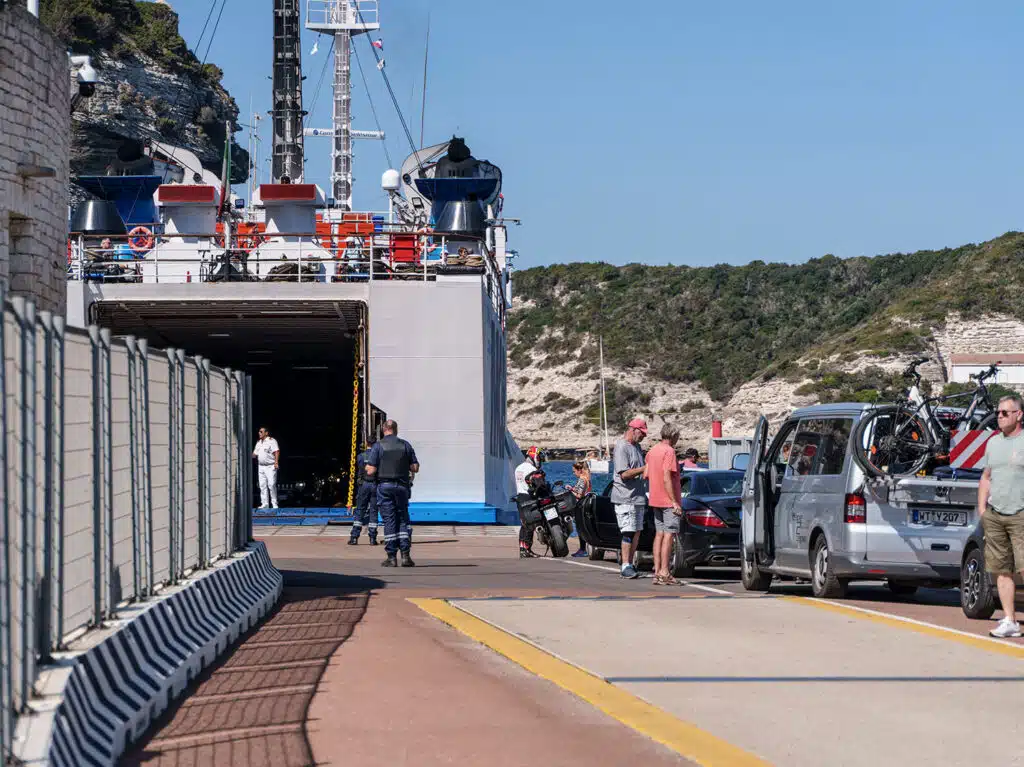
The Border Police (P.A.F) may be present in the port of Bonifacio on direct ferry links with one of the member states of the Convention implementing the Schengen Agreement. Its mission, in close collaboration with the Customs department, is to control migratory flows and cross-border traffic. It can intervene to carry out various controls on the arrival and departure of ships passing through the port of Bonifacio.
Contact
-
South Corsica Border Police Department - Dd Paf Corse Du Sud
Quartier Aéroport, 20114 FIGARI - +33 (0)4 95 71 04 29
Steering / Shackling
Le recours au Service de Pilotage est obligatoire pour tout navire de plus de 75 mètres de long entrant ou quittant le Port de Commerce de Bonifacio.
La Station de Pilotage de Corse du Sud compte 7 pilotes et dispose d’une flotte composée de 5 pilotines et de 3 semi-rigides, répartis sur les quatre Ports de Corse du Sud en fonction des besoins.
Afin de garantir des conditions d’accueil et de sécurité optimales, la Station de Pilotage bénéficie d’un contrat de services professionnels commercialisés par Météo-France, assurant un accès en temps réel aux informations météorologiques indispensables au bon déroulement des opérations de pilotage.
Les pilotes interviennent 24h /24 et 7j /7 dans les zones définies au Règlement Local, pour répondre aux demandes de la Capitainerie du Port de Commerce et/ou des armateurs.
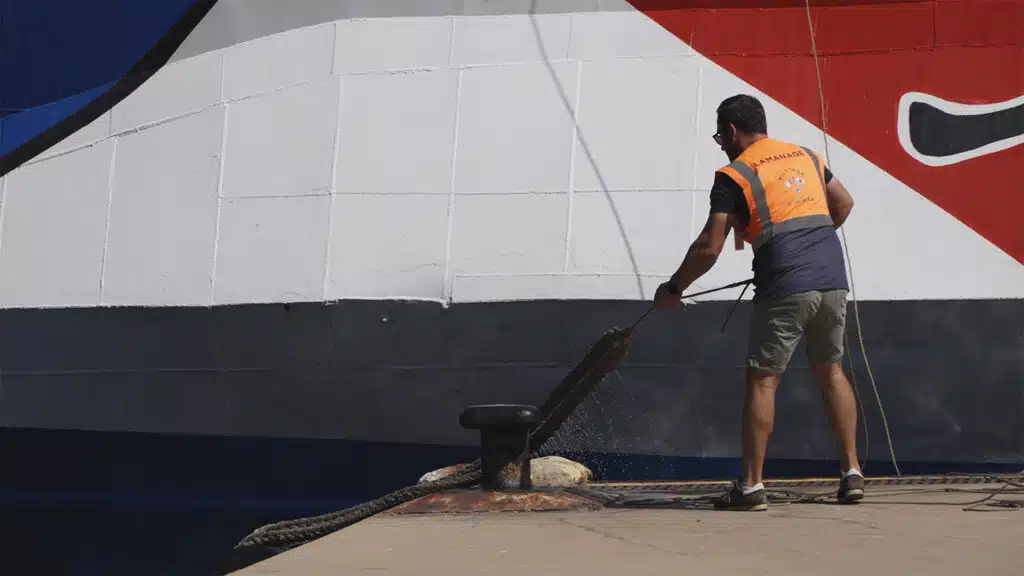
Le service de Lamanage de Bonifacio est intégré au Service de Pilotage, il est assuré par 3 marins-pilotins (4 en saison) pour l’ensemble des rotations de navires 365 jours/an et 24h /24.
Contact
- + 33 (0)4 95 21 42 28
- pilotajax@orange.fr
-
Bonifacio Maritime Station
Quai Sotta Portigliola - 20169 Bonifacio